Retrofitting Urban Street Canyons
UN Goal 11: Sustainable Urban Cities
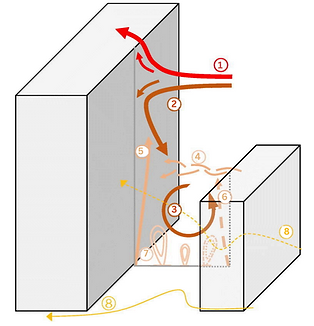
Across the world, cities are reaching ever upward—densifying to accommodate growing populations, shifting skylines with clusters of high-rises, and transforming urban fabrics in the process. This vertical expansion has created a distinct urban form: the street canyon—narrow corridors flanked by tall buildings that trap heat, amplify noise, and concentrate air pollutants. Living in both Tokyo and New York City, I have seen how these canyons shape the daily experiences of pedestrians, subtly influencing everything from the air they breathe to the comfort of the streets they walk on. What feels like a simple shade of concrete and glass is, in reality, a microclimate of its own—one that often worsens public health outcomes by intensifying air pollution exposure, urban heat stress, and noise levels.
This challenge is deeply tied to United Nations Sustainable Development Goal 11: Sustainable Cities and Communities, which calls for cities that are not just efficient and economically vibrant, but inclusive, safe, resilient, and sustainable. Street canyons embody the tension between urban density—a key sustainability strategy—and urban livability, which risks being compromised when design neglects the human scale. The health implications are pressing: trapped pollutants contribute to respiratory and cardiovascular illnesses; persistent heat raises risks for vulnerable populations; and elevated noise levels affect mental well-being.
Yet, the very form of these urban spaces also presents an opportunity. Research and real-world experiments suggest that strategically integrated green infrastructure—trees, green walls, green roofs, and vertical gardens—can soften the hard edges of street canyons, acting as natural filters for polluted air, dampening noise, and cooling overheated streetscapes. By rethinking how greenery is woven into the dense city core, we can begin to transform street canyons from environmental stressors into healthier, more livable urban corridors.
My capstone project explores this intersection of urbanism, health, and sustainability, asking: How can green infrastructure be designed and deployed to mitigate the adverse effects of street canyons while enhancing the pedestrian experience? Addressing this question aligns not only with SDG 11’s vision but with a broader imperative—to ensure that as our cities grow taller, they also remain habitable, humane, and future-focused.




Literature review created for my Capstone (Thesis):
Final Capstone paper: